How to Measure Pupillary Distance (PD)
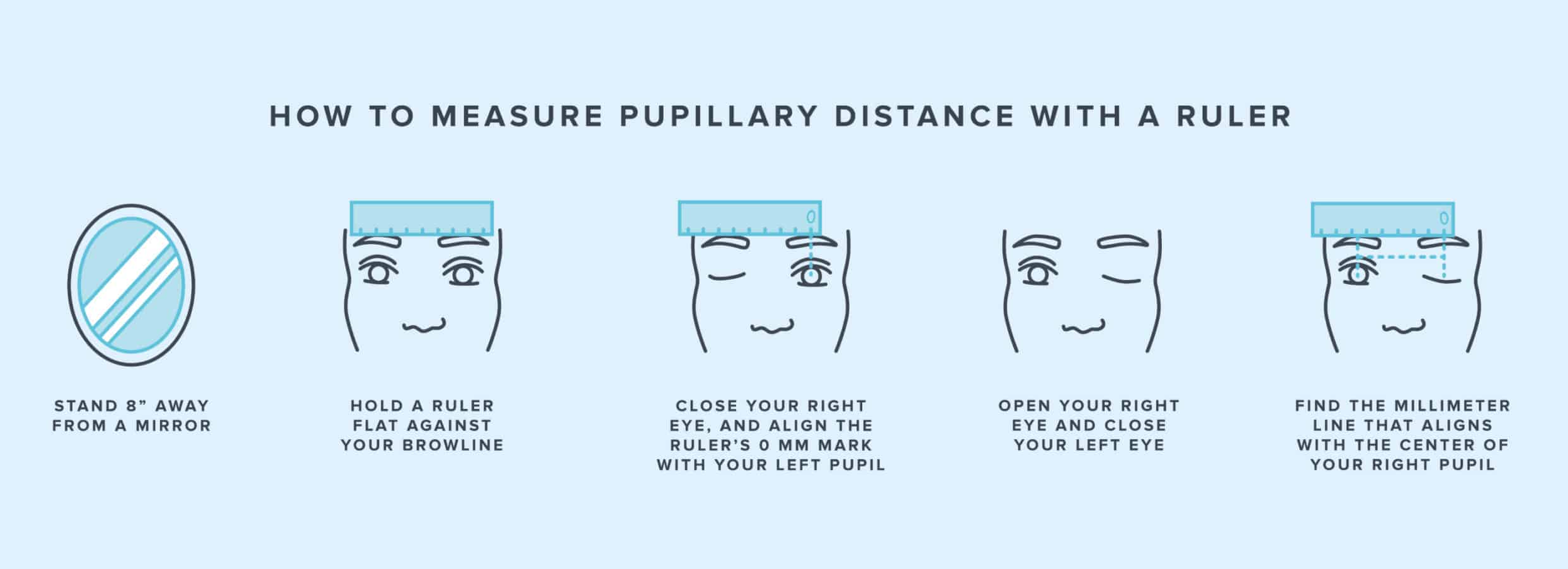
To measure your pupillary distance (PD) yourself, you’ll need a millimeter ruler, a mirror, and a way to hold the ruler steady against your forehead. Stand a few feet away from the mirror and hold the ruler horizontally against your forehead, ensuring the zero mark lines up with the center of one pupil. Then, use your other eye to read the millimeter mark that corresponds to the center of the opposite pupil. This measurement is your PD.
Here’s a more detailed breakdown:
Materials:
Millimeter Ruler: A ruler with millimeter markings is essential for accurate measurement.
Mirror: A mirror will allow you to see your pupils while taking the measurement.
Steady Hold: A way to hold the ruler against your forehead without moving it (like a friend or a stable surface).
Instructions:
1. Prepare:
Stand about 8 inches from the mirror.
2. Position the Ruler:
Hold the ruler horizontally against your brow, ensuring the zero mark aligns with the center of one pupil.
3. Measure:
If you’re using a friend to assist, look directly at the person holding the ruler.
If you’re using a mirror, close one eye and look at the mirror to align the ruler’s zero mark with the center of your open eye.
Open the other eye and look at the mirror to find the millimeter mark that lines up with the center of the closed eye.
4. Record:
The millimeter number that aligns with the center of the second pupil is your PD.
5. Repeat:
You can repeat the measurement a few times to ensure accuracy and then average the results.
Tips for Accuracy:
Keep the Ruler Steady:
Make sure the ruler stays firmly against your brow throughout the measurement.
Look into the Distance:
When measuring, look at a point in the distance (not at the ruler or mirror).
Take Your Time:
Don’t rush the process. Take a few deep breaths and focus on keeping the ruler stable.